Have you ever felt like your body is trying to tell you something, but you’re not quite sure how to understand its language? Maybe it’s a whisper of tiredness, a nudge of discomfort, or sometimes even a shout of pain. Our bodies are constantly communicating with us, sharing their wisdom and their needs. One of the most beautiful gifts of a yoga practice, as I see it, is that it helps us learn to listen more closely to this quiet, inner conversation.
I often think of each person’s body as its own unique universe, filled with intricate pathways, subtle energies, and deep-seated patterns. These patterns are shaped by everything – our thoughts, our experiences, how we move, how we rest, how we feel. When we step onto a yoga mat, we’re creating a special kind of space, a laboratory almost, where we can become more aware of this inner universe.
It’s not about forcing our bodies into impressive shapes or pushing past our limits. Instead, it’s an invitation to become an explorer, a gentle investigator of our own physical sensations. When we move into a simple stretch, what do we notice? Is there tightness in one shoulder but ease in the other? Does one side of the body feel more grounded or awake? There’s no judgment in this noticing; it’s simply gathering information, like a curious scientist observing a new phenomenon.
The breath is our most faithful guide in this exploration. When we link our movement with our breath, it’s like having a wise friend by our side, letting us know when to pause, when to soften, when to go a little deeper, or when to ease back. If you find yourself holding your breath in a pose, or if your breath becomes jagged and strained, that’s a clear signal from your body. It might be saying, “This is a bit too much right now,” or “Could we try this a different way?” Learning to heed these signals is a profound act of self-care.
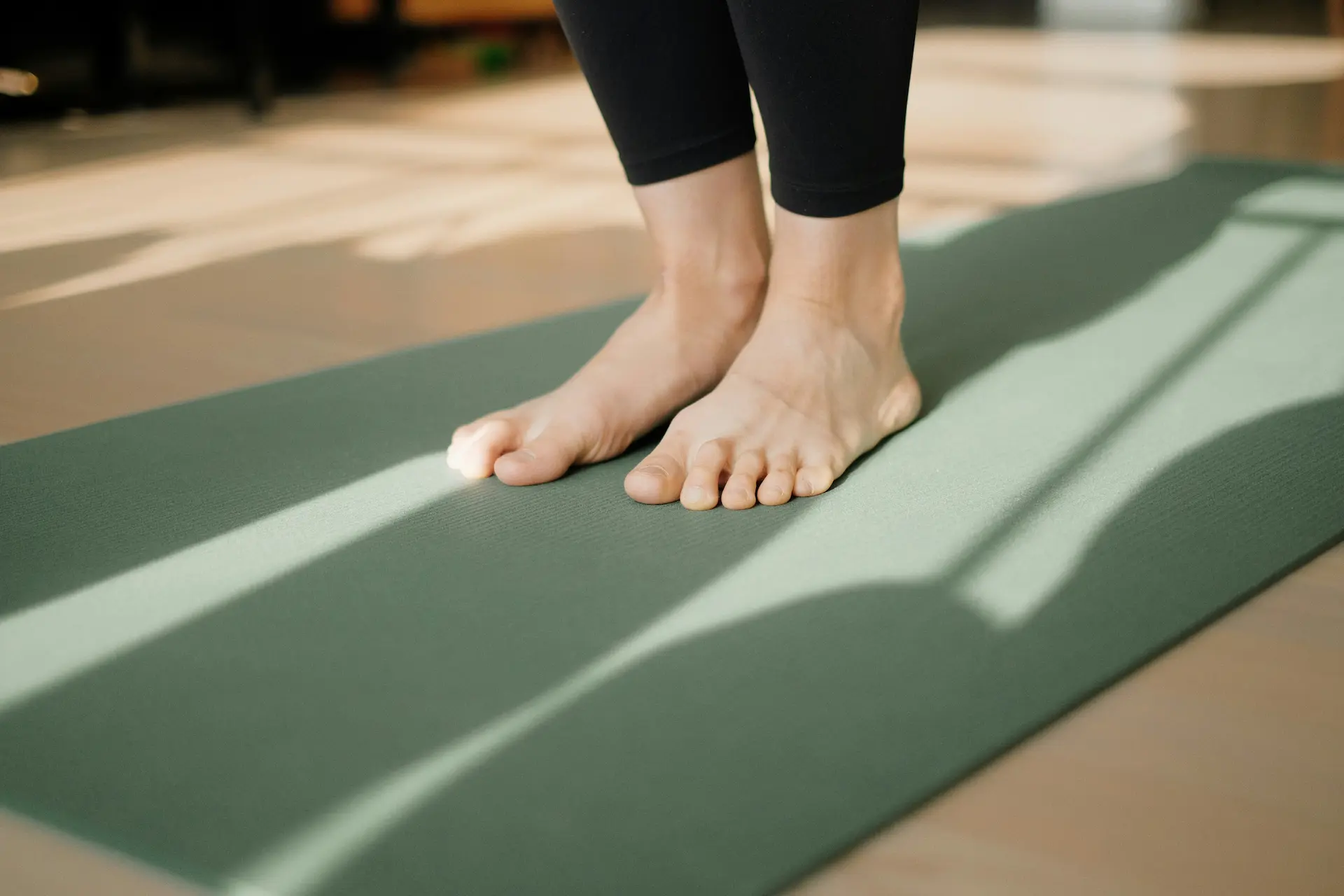
Imagine you’re trying to have a conversation with someone in a very noisy room. It would be difficult to hear them clearly, wouldn’t it? Our minds can often be like that noisy room, filled with to-do lists, worries, and endless chatter. A yoga practice helps to quiet that external noise, just for a little while, so we can tune into the softer voice of the body. As we focus on the feeling of a stretch, the rhythm of our breath, or the sensation of our feet on the ground, the mental chatter often begins to subside. And in that growing stillness, the body’s messages become clearer.
This kind of deep listening can be incredibly revealing. You might discover that the tension in your neck is connected to how you hold stress in your jaw. Or you might realize that when you consciously relax your shoulders, your breath deepens, and a sense of calm washes over you. These aren’t just physical adjustments; they are insights into the intricate web of your body-mind connection.
Sometimes, what the body has to say isn’t comfortable. It might bring up old aches, or feelings of vulnerability. Part of the practice is learning to stay present with these sensations too, without immediately trying to fix them or push them away. Can we meet discomfort with curiosity and kindness? Can we breathe into it, creating a little more space around it? Often, when we approach these tender spots with gentle awareness, they begin to soften and shift on their own. It’s like offering a warm, understanding presence to a part of ourselves that has been holding on tightly.
This “art of listening” isn’t confined to the yoga mat. As you become more attuned to your body’s signals during your practice, you’ll start to notice them more in your daily life. You might catch yourself tensing your shoulders while working at the computer and consciously choose to relax them. You might feel a wave of fatigue and decide to take a short break instead of pushing through. You might notice how certain foods make your body feel, or how different environments affect your energy.
This isn’t about becoming hyper-vigilant or overly analytical. It’s about cultivating a more compassionate and responsive relationship with your physical self. Your body is your home in this life, your wisest teacher, and your most loyal companion. Learning to listen to its whispers, its nudges, and even its shouts is a way of honoring this incredible gift. It’s a path to greater ease, deeper self-understanding, and a more harmonious way of moving through the world.
So, the next time you find a quiet moment, perhaps you could try this simple practice: close your eyes, take a few gentle breaths, and just ask your body, “What do you have to tell me today?” Then, simply listen. You might be surprised by the wisdom that unfolds.